Minnie Mouse cake design is an art form that combines creativity, precision, and a love for the iconic Disney character. From the signature color palette to the intricate details, every element plays a crucial role in capturing the essence of Minnie Mouse. This guide will provide a comprehensive overview of the essential design elements, color combinations, and techniques involved in creating a stunning Minnie Mouse cake that will delight any Disney fan.
Minnie Mouse Cake Design Elements
Minnie Mouse is a beloved Disney character known for her sweet and playful personality. Creating a cake that captures her iconic appearance requires careful attention to several essential design elements.
These elements work together to create a recognizable and visually appealing cake that evokes the joy and charm of Minnie Mouse.
Color Scheme
- Black: Represents Minnie’s ears and polka dots.
- Red: Symbolizes Minnie’s dress and bow.
- White: Balances the bold colors and creates a clean and classic look.
Shape
- Round or Oval: Provides a base for Minnie’s head and body.
- Ears: Two large, round ears are essential for Minnie’s signature silhouette.
Decorations
- Polka Dots: Black polka dots on Minnie’s dress and bow add a playful and feminine touch.
- Bow: A large red bow on Minnie’s head is her most recognizable feature.
- Eyes: Two large, black eyes with long eyelashes convey Minnie’s sweet and curious nature.
Color Palette and Patterns
Minnie Mouse is a beloved Disney character whose iconic look has been translated into countless cake designs. Her signature color palette plays a significant role in creating a recognizable and eye-catching cake.
The primary colors associated with Minnie Mouse are red, white, black, and yellow. Red is the most prominent color, often used for her dress or bow. White is used for her gloves, bloomers, and polka dots. Black is used for her ears, nose, and eyes, while yellow is used for her shoes and buttons.
Variations and Combinations
While the traditional color palette is widely used, variations and combinations of these colors are also popular. Some designs incorporate pink, purple, or blue to create a more whimsical or modern look. Polka dots are a common pattern associated with Minnie Mouse, often used on her dress or as a background element.
Popular Patterns and Motifs
In addition to polka dots, other popular patterns and motifs used in Minnie Mouse cake designs include hearts, bows, and stars. These elements can be incorporated into the cake’s shape, decoration, or overall design. For example, a cake shaped like Minnie Mouse’s head might have a red bow on top, while a cake decorated with hearts might have a Minnie Mouse silhouette in the center.
Ears and Head Design
Minnie Mouse’s signature ears are a defining feature that instantly identifies the beloved character. These ears are large, circular, and adorned with a black headband. Creating realistic ears for a Minnie Mouse cake requires careful attention to detail and precise execution.
Creating Ears Using Fondant
Fondant is a pliable and versatile edible material that is ideal for crafting Minnie Mouse ears. To create ears using fondant, follow these steps:
- Roll out a thin sheet of black fondant.
- Use a round cookie cutter to cut out two circles for the ears.
- Roll out a thin sheet of pink fondant.
- Cut out two smaller circles from the pink fondant and attach them to the center of the black circles.
- Use a toothpick or edible glue to attach the ears to the cake.
Attaching Ears to the Cake
To ensure a secure fit, attach the ears to the cake using edible glue or royal icing. Place the ears on the top of the cake, slightly tilted forward. Hold them in place for a few minutes until the adhesive sets.
Creating a Head Shape, Minnie mouse cake design
If desired, you can create a head shape for the cake to complete the Minnie Mouse design. To do this, use a round cake pan to bake a cake. Frost the cake with black frosting and use a toothpick to draw on Minnie Mouse’s facial features.
Facial Features
Minnie Mouse’s facial features are as iconic as her silhouette. Her large, expressive eyes, cute button nose, and wide smile have charmed audiences for decades. Sculpting these features on a Minnie Mouse cake requires careful attention to detail and a steady hand.
Sculpting the Eyes
To sculpt Minnie’s eyes, start by rolling out a small ball of white fondant. Flatten it slightly and use a toothpick to create a small indentation for the pupil. Fill the pupil with black fondant and use a damp brush to smooth the edges.
Sculpting the Nose
For Minnie’s nose, roll out a tiny ball of black fondant and shape it into a small cone. Attach it to the center of the face, just below the eyes. Use a toothpick to create two small nostrils.
Sculpting the Mouth
To create Minnie’s mouth, roll out a small strip of red fondant. Curve it slightly and attach it to the bottom of the face. Use a toothpick to create a small indentation for the upper lip and a larger one for the lower lip. Use edible paint or black fondant to add details like teeth and a tongue.
Dress and Accessories

Minnie Mouse’s iconic red and white polka dot dress is a staple element of her design. The dress often features a ruffled or pleated skirt, adding a touch of femininity and charm. To create this effect using frosting, you can pipe ruffles or pleats directly onto the cake or use edible fabric to create a more realistic look.
Accessories
Accessories play a vital role in completing Minnie Mouse’s outfit. Her signature bow is typically red or pink and can be placed on top of her head or attached to her dress. Shoes and gloves, often in contrasting colors, add to the overall design and create a cohesive look.
Browse the implementation of birthday cake for husband in real-world situations to understand its applications.
Themed Decorations

Incorporating themes into Minnie Mouse cake designs adds an extra layer of fun and personalization. Whether it’s a birthday celebration, a holiday festivity, or a specific character-based party, themed decorations can transform a simple cake into a captivating centerpiece.
Popular Themes
- Birthday Parties: Celebrate milestones with cakes adorned with candles, balloons, and festive sprinkles, creating a cheerful atmosphere.
- Holidays: From Christmas to Halloween, cakes can be decorated with festive colors, patterns, and figurines, capturing the spirit of the season.
- Character Themes: Minnie Mouse cakes can be customized to feature other beloved Disney characters, such as Mickey Mouse, Donald Duck, or Goofy, creating a magical and whimsical touch.
Incorporating Props and Figurines
Props and figurines are effective tools for creating a cohesive theme. Small figurines of Minnie Mouse, her friends, or other characters can be placed on top or around the cake, adding a touch of whimsy. Props such as miniature umbrellas, teacups, or bows can further enhance the desired atmosphere.
Edible Decorations
Edible decorations offer a delicious way to incorporate themes. Fondant or modeling chocolate can be used to create intricate shapes, such as Minnie Mouse’s signature bow or her cheerful smile. Sugar pearls, sprinkles, or edible glitter can add a touch of sparkle and sweetness, completing the themed design.
Obtain a comprehensive document about the application of kit kat birthday cake that is effective.
Fondant Techniques

Working with fondant offers endless possibilities for creating intricate and eye-catching Minnie Mouse-themed decorations. Understanding the techniques for coloring, rolling, and shaping fondant is crucial to achieve the desired results.
To color fondant, use food-grade gel or paste colors. Start with a small amount and gradually add more until the desired shade is achieved. Avoid using liquid colors, as they can alter the consistency of the fondant.
Rolling Fondant
- Lightly dust a work surface with cornstarch or confectioners’ sugar to prevent sticking.
- Knead the fondant until it becomes pliable and smooth.
- Use a rolling pin to roll out the fondant to an even thickness, approximately 1/8 inch.
- If the fondant becomes sticky, add more cornstarch or confectioners’ sugar.
Shaping Fondant
- Use cookie cutters to create basic shapes like circles and ovals.
- For more intricate shapes, mold the fondant by hand or use modeling tools.
- To create bows, roll out a thin strip of fondant and tie it into a knot.
- To create ruffles, use a knife or frilling tool to cut strips of fondant and then gather them together.
Frosting and Icing: Minnie Mouse Cake Design
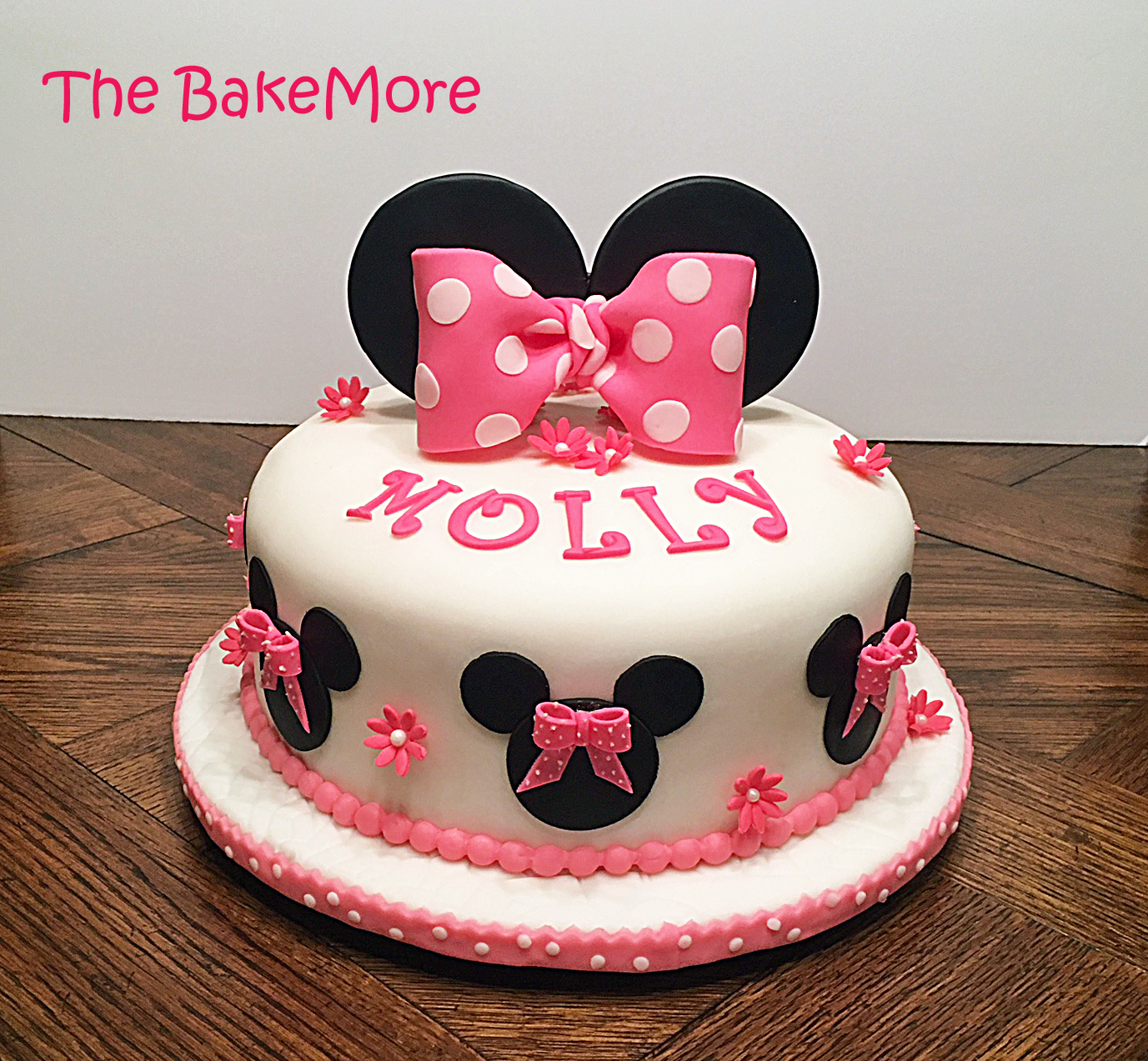
Minnie Mouse cakes demand frosting and icing that complements their delicate and playful aesthetic. Several types of frosting and icing are suitable for this purpose, each offering unique characteristics and textures.
Buttercream Frosting
- A classic choice, buttercream frosting is made from butter, sugar, and flavorings. It has a smooth, creamy texture that is easy to pipe and spread, making it ideal for creating borders, accents, and detailed decorations.
- To achieve a smooth, even frosting, use softened butter and confectioners’ sugar sifted to remove any lumps. Beat the ingredients together until light and fluffy, adding a small amount of milk or cream if necessary to adjust the consistency.
Whipped Cream Frosting
- Whipped cream frosting is a lighter, airier alternative to buttercream. Made from whipped cream, sugar, and flavorings, it has a fluffy, cloud-like texture that is perfect for adding volume to cakes.
- For a stable whipped cream frosting, use heavy whipping cream that has been chilled thoroughly. Whip the cream until stiff peaks form, then gradually add sugar and flavorings. Handle the frosting gently to prevent it from deflating.
Fondant Icing
- Fondant icing is a pliable, sugar-based paste that can be rolled out and draped over cakes to create a smooth, professional-looking finish. It is perfect for creating intricate details and modeling characters.
- To work with fondant, knead it until it becomes pliable and smooth. Roll it out on a lightly floured surface and use cutters or molds to create shapes. Attach the fondant to the cake using a small amount of water or edible glue.
Piping Techniques
Piping techniques are essential for creating intricate borders, accents, and decorative details on Minnie Mouse cakes. Using piping bags fitted with different tips, you can create a variety of effects, including:
- Borders: Use a round or star tip to pipe a border around the edges of the cake.
- Accents: Use a smaller round tip to pipe dots, swirls, or other accents onto the cake.
- Decorative Details: Use a leaf tip to create leaves, a grass tip to create grass, or a flower tip to create flowers.
Cake Structure and Assembly
The foundation of a Minnie Mouse cake is crucial for its stability and overall appearance. An ideal cake structure consists of multiple layers stacked and assembled with care to create the desired shape and support the weight of the decorations.
To achieve this, consider using a sturdy cake base, such as a dense chocolate cake or a firm vanilla sponge cake. Cut the cake layers evenly and level them using a cake leveler to ensure a flat and stable surface for stacking.
Stacking and Assembly
- Apply a thin layer of frosting or buttercream between each cake layer to adhere them together and prevent sliding.
- Use cake dowels or straws inserted into the bottom layer to provide additional support and prevent the cake from collapsing under the weight of the decorations.
- Stack the layers carefully, alternating the direction of each layer to distribute the weight evenly and create a more stable structure.
Stabilizing Techniques
- For taller cakes, consider using a cake board or cake plate between each layer to provide additional support and prevent the cake from sinking in the middle.
- Use frosting or ganache to fill any gaps between the layers and create a smooth surface for applying fondant or other decorations.
- Refrigerate the cake after assembling to firm up the frosting and stabilize the structure before decorating.